Managing Cargo Beyond Conventional Shipping Routes
Standard freight systems work well until the cargo stops fitting comfortably within them.
Over the years, STG has handled shipments where dimensions, weight, infrastructure, or destination requirements meant conventional forwarding arrangements were no longer suitable. In those situations, alternative transport methods, revised routes, or entirely different shipping strategies often became necessary.
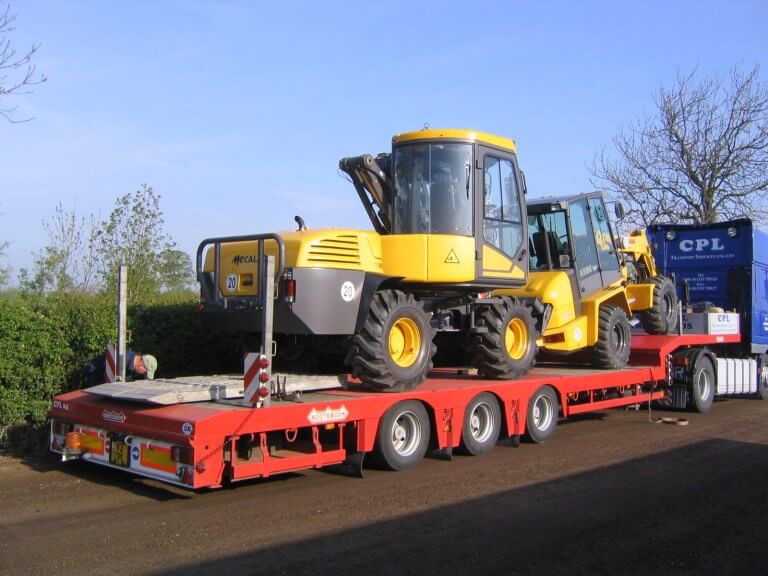
One early project involved a Demag excavator arriving into Rotterdam by barge before being transferred by floating crane onto a waiting trailer for onward transport. Another operation required a complete truck and trailer combination to be shipped into Ghana alongside an extrusion press because no local transport equipment could safely handle the load once discharged.
Freight forwarding at this level depends less on standard process and more on understanding how each stage of the movement connects operationally to the next.
Coordinating Freight Across Ports, Rail, and Road Networks
Certain shipments only become workable once several transport systems are combined together.
STG has coordinated freight movements involving ferries, barges, rail freight, Ro-Ro services, specialist trailers, charter vessels, and cargo aircraft depending on what the shipment required once underway.
Cargo destined for Kazakhstan, for example, was shipped into Estonia before transfer onto a dedicated freight train moving towards Almaty through Russia. In another project, bottle washing equipment moved first by barge from Mannheim before transfer in Rotterdam for the final stage into Belfast.
These types of operations require continuous coordination between loading schedules, transfer points, route availability, and onward delivery planning once cargo changes transport method during the journey.