Freight Planning and Transport Coordination in Stevenage
Stevenage occupies an important position within the South East transport network, with direct access towards London, the Midlands, major ports, and international freight routes through the wider motorway system.
That location brings advantages, although it rarely removes complexity. Industrial estates with restricted access, timed delivery windows, bridge limitations, urban traffic pressure, and construction activity all influence how freight movements must be planned.
At STG, transport planning begins long before the vehicle moves.
Routes are assessed in detail, not simply for distance, but for suitability. Junction layouts, turning circles, gradients, escort requirements, and contingency options are reviewed in advance so that the movement can proceed without unnecessary interruption once underway.
Over the years, this process has supported projects across Europe, the Middle East, Central Asia, and North America, where the transport method itself often had to be developed alongside the route.
Managing Heavy and Abnormal Freight Movements
Some freight projects are defined less by distance and more by the characteristics of the load itself.
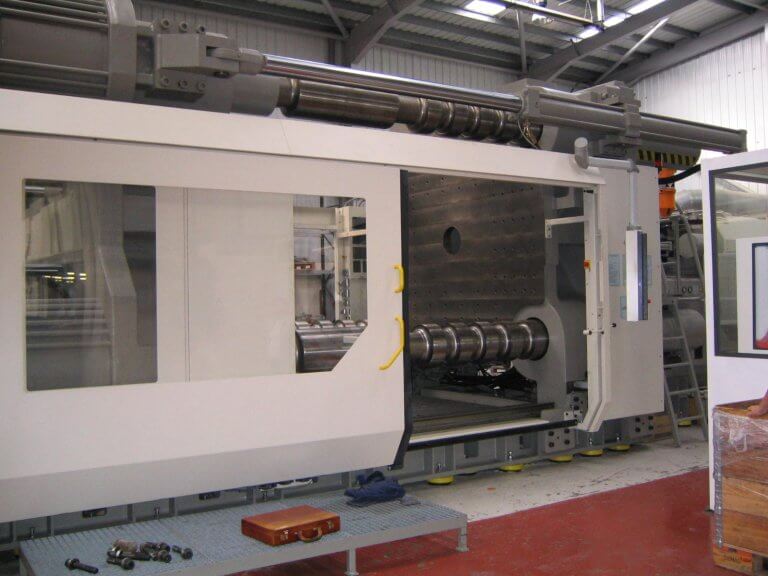
STG has coordinated movements involving large excavators, industrial fabrications, refinery components, tunnelling machinery, and specialist engineering equipment where dimensions and weight exceeded conventional transport limits.
One notable project involved sections of tunnelling machinery delivered into southern Europe, where the principal transport unit exceeded 130 tonnes and access to the final site required detailed planning due to the absence of a conventional approach road.
Experience gained on projects of this scale remains directly relevant to Stevenage freight operations today, particularly where industrial developments, infrastructure work, or restricted delivery environments create similar logistical constraints.